Palamu Fort
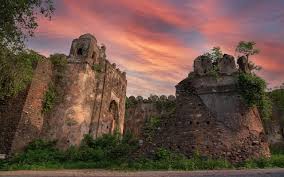
The old fort in the plains, which existed even before the Chero dynasty, was built by the King of Raksel Dynasty. However, it was during the reign of King Medini Ray (1658–1674), a Chero tribal king, that the fort was reconstructed into a strong defensive structure. His rule extended across South Gaya and Hazaribagh. After defeating the Nagvanshi Raja Raghunath Shah of Navratangarh, Medini Ray used the spoils to construct a lower fort near Satbarwa, which became historically significant.
The Mughals, under Emperor Akbar, tried to conquer Palamu in 1574 led by Raja Man Singh, but his troops were eventually defeated by 1605. Later, under Jahangir, several invasions occurred due to the refusal of the Raksel rulers to pay tribute. In 1613, the Chero chief Bhagwant Rai took over Palamu with help from local allies, establishing Chero rule.
On 3 April 1660, Daud Khan began his invasion. He demanded conversion of the Hindu population under the Chero rule, which was refused. After months of resistance, both Palamu forts were captured, temples were destroyed, and Islamic rule was imposed.
After Medini Ray’s death, internal conflict and betrayal led to the dynasty's collapse. In 1771, Captain Camac of the British East India Company attacked the forts. Despite brave defense by the Chero soldiers, they were forced to abandon the New Fort. By 1772, the British had taken control. In 1882, Cheros and Kharwars rebelled again, but their uprising was suppressed.
Today, the twin forts of Palamu remain a symbol of tribal bravery and resistance. Surrounded by Betla National Park, they attract history lovers and tourists from across India.
📍 Location: Near Betla National Park, Latehar District, Jharkhand